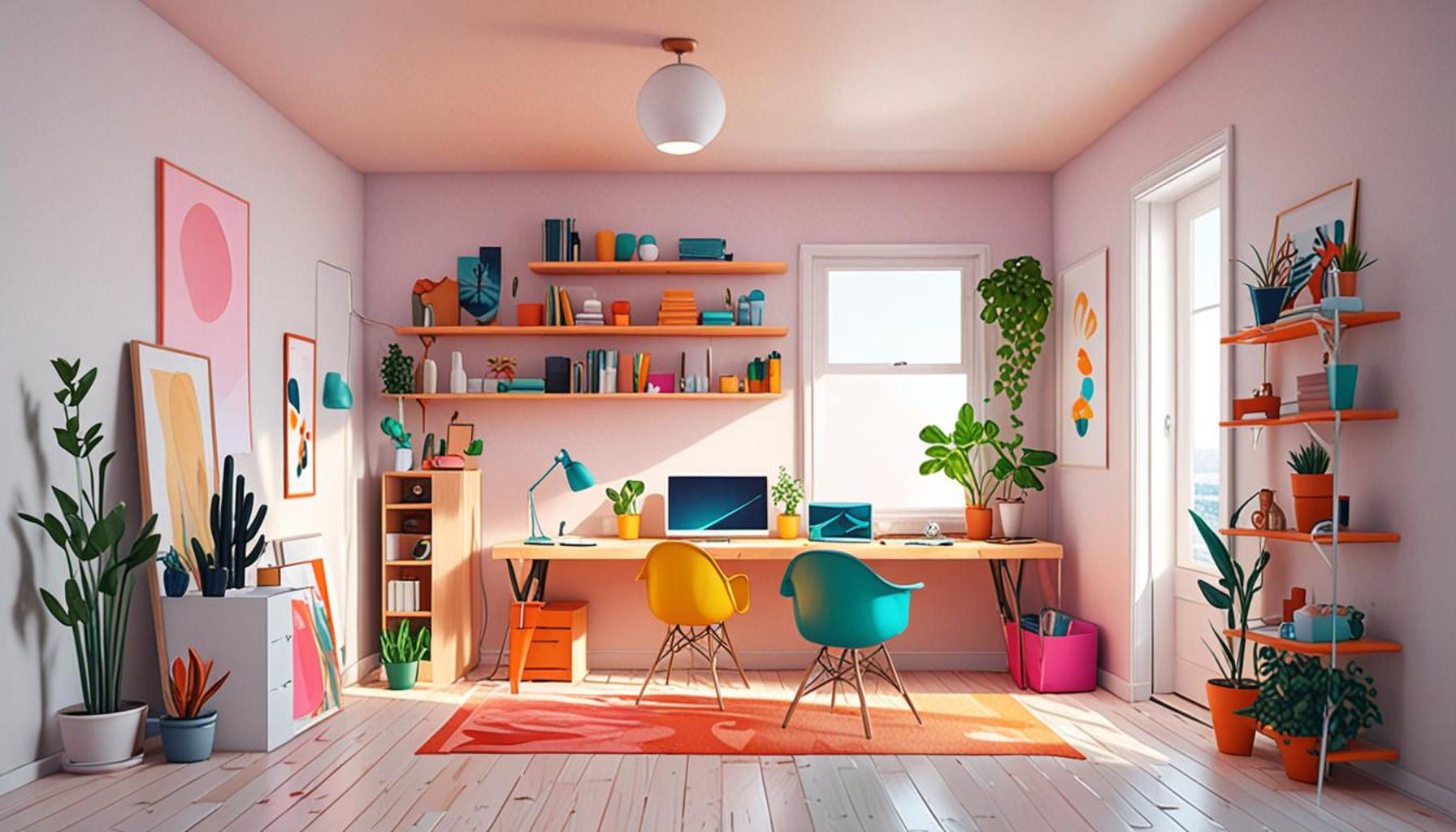
Spatial Efficiency in Study Environments: How Minimalism Can Improve Concentration

Creating a Tranquil Study Environment
In today’s fast-paced world, distractions lurk around every corner, especially in study environments. Many students face the challenge of maintaining their focus amidst the chaos of cluttered desks and overflowing bookshelves. However, adopting a minimalist approach can significantly reshape how we engage with our learning spaces, leading to enhanced productivity and improved mental clarity.
So, what exactly does spatial efficiency look like in a study environment? Here are some key features that embody minimalism and how they contribute to a more effective study space:
- Decluttered Surfaces: Reducing the number of items on your desk can help foster a clearer mindset. Imagine a workspace where only essential tools — like a laptop, notebooks, and a few writing instruments — occupy the desk, eliminating visual clutter that can distract from your studies.
- Functional Furniture: Opting for minimalistic yet versatile furniture is crucial. A folding desk can serve as a study table during the day and a side table in the evening. Chairs that provide comfort yet have a simple design can enhance your focus, reducing the likelihood of a tense posture or distraction.
- Thoughtful Layouts: Arranging your study area thoughtfully is vital. Aim to position your desk near a window to take advantage of natural light, which has been shown to improve mood and concentration. Ensuring that bookshelves are neatly organized and only contain relevant materials can also minimize distractions.
Research suggests that minimalism can enhance concentration and boost productivity. Studies indicate that a clutter-free environment can reduce cognitive overload, allowing students to immerse themselves in their studies more deeply. Many individuals report feeling less anxious and more motivated in spaces that prioritize simplicity.
Creating a serene atmosphere not only benefits the physical space but also has profound psychological impacts. It can be helpful to introduce elements of nature, such as a small plant on your desk, which studies associate with improved concentration and a sense of calm. Similarly, neutral color palettes for walls and furniture can lead to a more tranquil environment, conducive to learning.
As we explore the link between spatial efficiency and mental clarity, we will uncover practical strategies to transform any bustling workspace into a tranquil haven. Embracing minimalism in study environments isn’t just about aesthetics; it’s about cultivating a space that nurtures focus and spurs creativity. By being intentional about how you design your study area, you will likely find that your ability to learn and retain information can improve significantly.
DISCOVER MORE: Click here to learn about mindful living
Maximizing Minimalism: Key Elements of a Productive Study Space
Understanding spatial efficiency in study environments involves more than just decluttering; it necessitates a fundamental shift in how we perceive and organize our learning spaces. The principle of minimalism advocates for simplicity, functionality, and intentionality, all of which are crucial for fostering an atmosphere that promotes deep focus and effective learning. Here are some essential elements that highlight how minimalistic design can significantly enhance concentration:
- Essential Tools Only: When setting up a study space, it is vital to keep only the necessary tools at hand. This means pencil cases, textbooks, and stationery should be limited to what is actively needed for assignments or revision. By streamlining your workspace, you minimize the chances of distractions caused by irrelevant objects.
- Minimalist Color Schemes: Color psychology plays an important role in creating an optimal study environment. Opting for a minimalist color palette—think soft whites, gentle greys, and calming blues—can help reduce mental fatigue and create a peaceful backdrop for work. Avoid loud colors that can provoke anxiety and disrupt concentration, and instead, choose hues that promote serenity and focus.
- Smart Tech Integration: In the digital age, technology is integral to studying. However, having multiple screens and gadgets can lead to distractions rather than productivity. Limit tech devices to what is essential—perhaps one laptop or tablet, along with noise-canceling headphones. Technology that enhances rather than clutters your study environment will support your concentration efforts.
Moreover, research on the benefits of minimalism emphasizes its positive impact on mental health. A cluttered environment can exacerbate feelings of stress and hinder cognitive function. Conversely, studies reveal that individuals who study in minimalist environments report higher levels of motivation and engagement with their tasks. This correlation demonstrates the tangible advantages of creating a space that promotes minimalism.
Incorporating minimalistic principles not only transforms the visual appeal of a study space but also enhances its utility. This functional approach empowers students to approach their work with clarity and determination. For instance, using modular storage solutions can keep materials organized without overwhelming the senses, helping students find what they need quickly and without distraction.
As we delve deeper into how minimalism can reshape study environments, consider how each element plays a role in optimizing both physical space and mental capacity. Engaging in the practice of minimalism is not about simply reducing items but about cultivating an atmosphere that is nurturing and inspiring. Thus, a minimalist study space can turn a chaotic mind into a focused learner, resulting in improved academic performance and well-being.
| Category | Description |
|---|---|
| Enhanced Focus | A minimalist environment reduces distractions, allowing for increased concentration on tasks at hand. |
| Clutter Reduction | By minimizing items in study spaces, individuals can prioritize essential materials, enhancing productivity and mental clarity. |
The concept of Spatial Efficiency greatly affects one’s ability to concentrate. When study environments are stripped of unnecessary distractions, it becomes easier for individuals to focus on their work. This involves creating a space that prioritizes elements that foster learning and concentration while eliminating clutter that can over-stimulate the brain. Studies suggest that environments tailored to minimalism not only promote clearer thought patterns but also reduce anxiety levels associated with chaotic settings.In a minimalist study space, every object serves a purpose, which enhances the learning experience. For instance, having a clear desk with only essential materials like textbooks and a notebook can significantly improve cognitive performance. Moreover, an organized, less cluttered space allows students to mentally process information without the burden of excess stimuli. Embracing such spatial efficiency can indeed transform ordinary study habits into remarkable academic achievements.
DISCOVER MORE: Click here for practical tips on decluttering
Creating Zones for Focus and Flow
Incorporating zoning within a study space is another vital aspect of minimalism that enhances concentration. Dividing the space into specific areas for different tasks can significantly increase productivity. For instance, a designated area for reading, another for writing, and perhaps a zone for digital work can help students transition more seamlessly between tasks. Such clear separations encourage a psychological shift; when entering a reading zone, for example, the student’s mind can automatically adjust to a focused state, minimizing distractions.
Equally important is the role of ergonomics in a minimalist study environment. A carefully chosen chair and desk setup not only promote physical comfort but also contribute to sustained concentration. Studies show that discomfort can significantly diminish cognitive abilities, making even the simplest tasks feel more laborious. Therefore, investing in a chair that supports good posture and a desk at the right height can be beneficial in maintaining energy and focus without constant adjustments that disrupt the flow of study.
The incorporation of nature elements further underscores the philosophy of minimalism and its benefits in study environments. Research indicates that plants can reduce stress levels and enhance cognitive function. Adding a small succulent or a few low-maintenance plants in a study space can infuse the area with a sense of tranquility, making the environment more conducive to focused learning. Such natural elements not only break the monotony often associated with minimalism but also harmonize well with a simplified aesthetic design.
Lighting and Sound Considerations
Lighting is another critical factor in achieving optimal spatial efficiency in study environments. Natural light is often considered the most effective, as it enhances mood and focus. If possible, position your study area near a window to take advantage of daylight. For evening or low-light conditions, adjustable and soft artificial lighting options can create a calm atmosphere. Avoid harsh fluorescent lights that can lead to fatigue and decreased concentration. Instead, consider warm LED bulbs or desk lamps that provide a soothing glow without overwhelming the senses.
Sound management also plays a pivotal role in fostering concentration within a minimalist study space. While some individuals thrive in silence, others require ambient noise to maintain focus. Using noise-canceling headphones can help create a personal auditory bubble that mutes distracting sounds from the environment. For those who prefer a bit of background noise, apps that produce white noise or gentle ambient sounds can serve as effective aids, contributing to an atmosphere where concentration flourishes.
- Color Schemes: A minimalist color palette such as neutral tones or earthy colors can enhance concentration by reducing visual clutter.
- Functional Decor: Opt for furniture that serves dual purposes, such as a desk that provides storage space, to maintain a tidy area.
- Task-Based Zones: Designate specific areas for different study activities to help your brain shift into the right mindset for each task.
Emphasizing these elements within your study environment not only embodies minimalism but also actively cultivates a landscape ripe for scholarly productivity. As students redefine their study spaces with a focus on efficiency, they can uncover previously untapped levels of concentration and creativity necessary for academic success.
DISCOVER MORE: Click here to learn how mindfulness can enhance your personal organization
Conclusion
In a world increasingly defined by distractions and clutter, the principles of minimalism offer profound insight into enhancing spatial efficiency within study environments. By emphasizing thoughtful organization and design, students can create spaces that not only inspire but actively promote concentration and productivity. The strategies outlined—such as effective zoning, ergonomic setups, and the subtle use of natural elements—serve as tools for carving out personal sanctuaries dedicated to learning.
The careful incorporation of lighting and sound management further contributes to an atmosphere conducive to deep focus. Research underscores the psychological benefits that accompany a well-crafted study environment; the clearer the space, the clearer the mind. By distilling study areas down to their essentials, individuals do not just optimize their physical surroundings but also cultivate a mentality that favors clarity, creativity, and cognitive flow.
As students and lifelong learners embrace minimalism, they position themselves to tap into higher levels of academic achievement. A shift in perspective—viewing study spaces as personalized reflections of focus rather than mere areas for activities—can unleash dormant potential. As you embark on redefining your own study environments, remember that fostering a minimalist approach may very well be the key to unlocking new dimensions of concentration and success in your educational journey.